


Infertility from the Perspective of Traditional Chinese Medicine
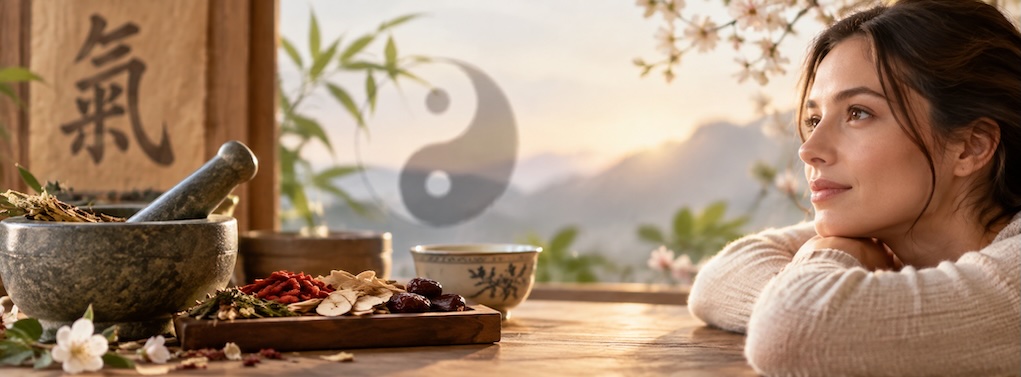
Today’s world is full of paradoxes. On the one hand, we strive to be successful, progressive, independent and free – in short, to keep up with the times. On the other hand, many of us still hope to fulfil more traditional aspirations later in life, including starting a family and raising children. Yet these ambitions do not always go hand in hand. Our lifestyle, everyday habits and the way we care for our health may all influence our overall well-being and reproductive health.
Traditional Chinese Medicine (TCM) approaches fertility from a holistic perspective. Rooted in observations of nature and its cycles, it emphasises balance and harmony within the body. Throughout this article, we therefore use analogies drawn from nature to explain how fertility is traditionally understood within TCM theory.
To Have or Not to Have a Healthy Child?
Preparation for pregnancy can begin long before conception itself. Maintaining good overall health, paying attention to the menstrual cycle and adopting a balanced lifestyle may all form part of this preparation.
From the perspective of TCM, the menstrual cycle provides important information about a woman’s internal balance. Changes in the timing, duration or character of menstruation, as well as accompanying symptoms, are therefore taken into consideration when identifying an individual TCM pattern.
TCM is a traditional system with its own diagnostic concepts and terminology. These should not be confused with diagnoses used in modern reproductive medicine.
Taking Care of Fertile Soil
From a TCM perspective, preparation for future reproductive health begins as early as the first menstrual cycles.
A regular menstrual cycle is traditionally regarded as one of the indicators of balance in the female body. A textbook cycle is often described as occurring approximately every 28 days, with some natural variation, lasting around five days and without significant pain, excessive or very scanty bleeding, or prolonged spotting before or after menstruation.
Symptoms such as headaches, breast tenderness, lower abdominal discomfort, irritability, emotional changes, swelling or other premenstrual complaints are also considered when assessing the individual pattern.
In TCM practice, Calming of Rough Water (code 062) is a traditional herbal formula associated with certain patterns involving menstrual and premenstrual discomfort.
Naturally, menstrual cycles vary from woman to woman, and deviations from an idealised cycle do not by themselves establish either a medical diagnosis or a TCM pattern.
Preparing the Soil for Sowing
Menstrual health deserves attention throughout a woman’s reproductive life.
Modern treatments such as pain medication, hormonal contraception and other hormonal therapies have established uses in conventional medicine. TCM, however, views menstrual health through a different conceptual framework, focusing on patterns involving Qi, Blood, Yin and Yang. In TCM theory, menstruation can be compared metaphorically to a vessel that gradually fills and periodically empties. When menstruation is delayed, absent or unusually scanty, one of the patterns a TCM practitioner may consider is Blood Deficiency.
Traditional herbal formulas associated with nourishing Blood and supporting its movement include Relief of Carmine River (code 051) and, depending on the individual pattern, Calming of Rough Water (code 062).
The appropriate TCM approach depends on the overall pattern rather than on a single symptom.
Plant a Tree, Sow a Seed…
Reproduction can be illustrated through a simple analogy from nature: planting a seed in carefully prepared soil. Within TCM theory, female reproductive health is closely associated with the Kidney system and Blood. In our analogy, the uterus and ovaries represent the soil in which the seed is expected to take root and grow. Male reproductive health is equally important. The quality of the “seed” and the condition of the “soil” both form part of the overall picture. When conception does not occur or a pregnancy does not continue, TCM practitioners may distinguish between several different patterns of imbalance.
TCM Patterns Traditionally Associated with Female Fertility Problems
1. Kidney Deficiency
Kidney Deficiency may take several forms within TCM theory.
· Kidney Yang Deficiency – SHEN YANG XU
Kidney Yang can be understood metaphorically as the warming force of the body. When it is deficient, our imaginary soil may be too cold for the seed to thrive.
Signs traditionally associated with this TCM pattern may include sensitivity to cold, lower back discomfort, dizziness, tinnitus, weakness of the knees, fatigue, a pale complexion, frequent clear urination and menstrual cycles that are delayed or relatively scanty.
In the context of reproductive health, this pattern may also be considered by a TCM practitioner when assessing certain fertility difficulties.
A traditional herbal formula associated with warming and supporting Kidney Yang is Midnight Delight (code 172) + Beverage from True Ginseng (code 822) may also be used within an individually selected TCM regimen.
· Kidney Yin Deficiency – SHEN YIN XU
Kidney Yin Deficiency can be compared to soil that lacks moisture and nourishment.
Signs traditionally associated with this pattern may include lower back discomfort, dizziness, tinnitus, night sweating, dry mouth, a preference for drinking small amounts at a time, poor memory, scanty dark urine and relatively scanty or delayed menstruation.
In TCM practice, Shide of Jade Jewel (code 182) is traditionally associated with nourishing Kidney Yin. Beverage from True Ginseng (code 822) may also be used as part of an individually selected regimen.
· Kidney Yin Deficiency with Empty Heat – SHEN YIN XU + RE XU
This pattern can be imagined as depleted soil that has also become excessively dry and warm.
Traditional TCM signs may include night sweating, dry mouth, thirst for small sips of water, lower back discomfort, dizziness, tinnitus, poor memory, scanty dark urine, sensations of heat in the chest, palms or soles, flushed cheeks and a feeling of heat later in the day.
Menstrual changes may also form part of the overall pattern.
Fresh Evening Pagoda (Code 185) is traditionally associated with nourishing Kidney Yin and addressing Empty Heat. Beverage from True Ginseng (code 822) may also form part of a TCM regimen.
2. Dampness in the Lower Burner – XIA JIAO SHI
In TCM terminology, the Lower Burner broadly refers to the lower part of the body, including the lower abdomen.
Dampness can be compared to heavy, waterlogged soil. In the context of reproductive health, signs traditionally associated with this pattern may include a feeling of heaviness, excessive vaginal discharge, menstrual irregularities and certain types of mid-cycle discomfort or bleeding.
Body weight and other signs may also be considered as part of the overall TCM assessment.
Traditional formulas associated with this type of pattern include Dam of Yellow River (code 111) and, depending on the individual presentation, Calming of Rough Water (code 062). Beverage from True Ginseng (code 822) may also be included in an individually selected regimen.
3. Blood Deficiency – XUE XU
In TCM theory, Blood provides nourishment and moisture to the body.
Blood Deficiency may therefore be compared to soil that is too dry and poorly nourished to provide ideal growing conditions.
Signs traditionally associated with Blood Deficiency include relatively scanty or delayed menstruation, absence of menstruation in some cases, fatigue, dizziness, blurred vision and pallor.
The traditional herbal formula Bracelet of Eight Pearls (code 191) is associated with nourishing and supporting Blood. Beverage from True Ginseng (code 822) may also be used as part of a TCM regimen.
4. Cold in the Uterus – HAN
In our analogy, Cold in the Uterus resembles frozen soil in which a seed may have difficulty taking root.
Signs traditionally associated with this TCM pattern may include delayed or painful menstruation, a sensation of cold during menstruation, lower back discomfort, cold hands and feet, and changes in the character of menstrual blood.
The traditional formula Emblazement Cinnabar Field (Code 055) is associated in TCM with warming the uterus and dispelling Cold. Beverage from True Ginseng (code 822) may also be used within an individually selected regimen.
5. Qi Stagnation – QI ZHI
Qi Stagnation can be compared to a garden bed covered by a sheet and deprived of the free circulation of light and warmth.
Signs traditionally associated with this pattern may include irregular menstruation, premenstrual tension, breast distension or tenderness, irritability and emotional tension.
The traditional formula Freedom of Easy Wanderer (code 061) is associated with promoting the smooth flow of Qi and harmonising certain TCM patterns. Beverage from True Ginseng (code 822) may also form part of an individually selected regimen.
6. Blood Stasis – YU XUE
Blood Stasis can be compared to an irrigation system in which the flow has become obstructed.
In the context of menstrual health, signs traditionally associated with this pattern may include painful menstruation and dark menstrual blood with clots.
Traditional formulas used in relation to such TCM patterns include Relief of Carmine River (code 051) and, depending on the individual presentation, Calming of Rough Water (code 062). Beverage from True Ginseng (code 822) may also be included in a TCM regimen.